Lightweight blocks, also known as AAC (autoclaved aerated concrete) blocks, are increasingly used for house walls because they are large, light, and quick to lay. To get the most out of them, AAC blocks should be laid with a dedicated ready-mixed mortar rather than ordinary cement and sand mortar. This article explains how to use thin-bed mortar for AAC blocks, using MU-380 ThinBedMax as an example, which Anakjuragan sells in 40 kg bags. Technical data is taken from the manufacturer's official data sheet.
What is thin-bed mortar for AAC blocks?
Ready-mixed mortar is a dry, ready-to-use blend containing Portland cement, selected fine sand, fillers, and additives. You only need to add water. According to the MU-380 data sheet, the product is designed for laying AAC blocks with an adhesive layer about 3 mm thick, using sand with a maximum grain size of 1.2 mm. The additives make the mortar easier to work and improve adhesion.
Advantages over ordinary cement and sand mortar
- Thin joints: about 3 mm, much thinner than conventional mortar, so less material is used.
- Consistent proportions: the composition is set at the factory and does not depend on guesswork on site.
- Practical: no need to sieve sand and mix ingredients one by one, just add water and stir.
- Faster, neater work: wall surfaces tend to be flatter, which makes the following plastering easier.
- A cleaner work area, since there are no separate piles of sand and cement.
Ordinary cement and sand mortar can still be used for AAC blocks, but thick joints waste the advantage of the blocks' precise dimensions and make the wall heavier and more costly in materials.
Related products in storeCheck the latest price and stock from this article. See productsLaying steps according to the data sheet
- Prepare the surface: clean the base of dirt and oil, then set up string lines or guides so the wall is straight and level.
- Clean the AAC blocks of dust and dampen them with water before laying.
- Pour 8 to 9 liters of water into the mixing tub for one 40 kg bag, add the dry mortar, then stir until even.
- Lay a base layer roughly 10 mm thick on the ground beam or concrete floor as a bed for the first course, as recommended by the manufacturer.
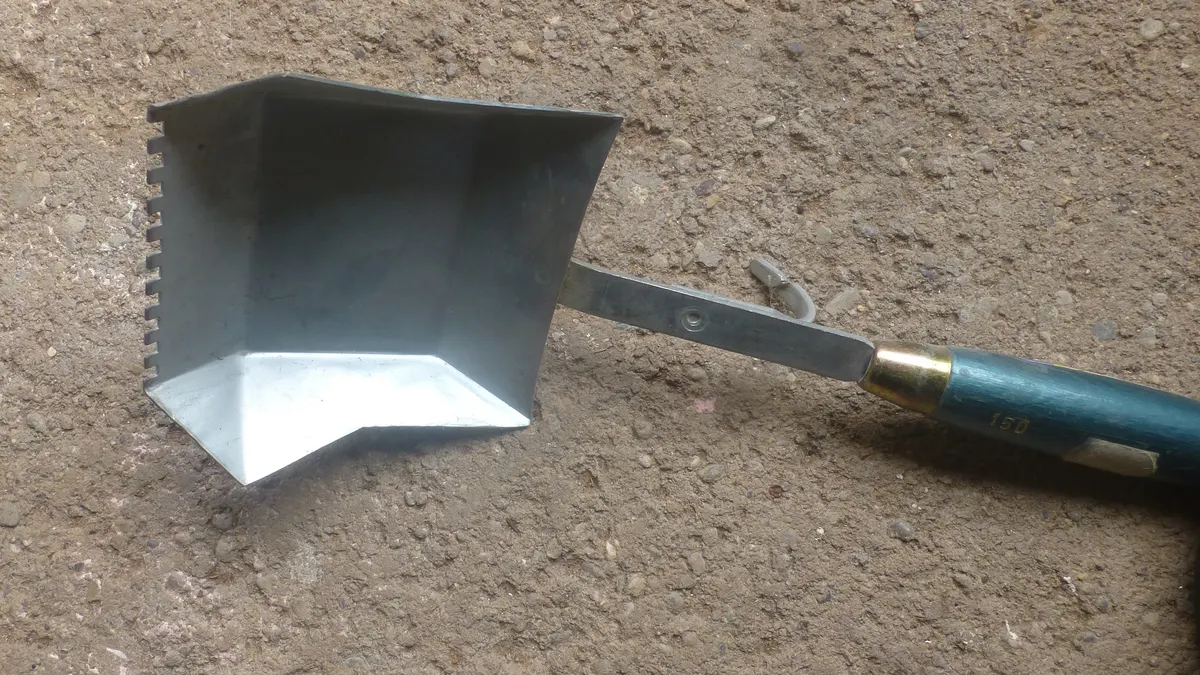
- Apply the adhesive to the vertical and horizontal faces of the block, preferably with a notched applicator so the thickness is even.
- Place the block, then tap it with a rubber mallet until it is level and fully bonded. Check level with a spirit level every few blocks.
- Where the wall meets a structural column, the manufacturer recommends using a special bonding material for a better joint.
The data sheet states a pot life of about 1 hour, meaning the mixed mortar should be used within that time. Mix only as much as you need, and do not add more water to mortar that has started to stiffen.
Estimated coverage per bag
According to the MU-380 data sheet, one 40 kg bag applied at 3 mm thickness covers approximately:
- 7.5 cm thick AAC block wall: about 16 square meters.
- 10 cm thick AAC block wall: about 10 square meters.
For example, a Bata Ringan Hebel 60x20x10 cm block has a 60 by 20 cm face, so one square meter of wall needs about 8.3 blocks. For a 20 square meter wall using 10 cm blocks, the estimate is about 167 blocks and 2 bags of mortar. Add a margin for cut blocks and spilled adhesive.
Storage and safety
Store mortar bags in a closed, dry room and avoid stacking them too high. The manufacturer states a shelf life of about 10 months if the bags are sealed and kept in a dry place. Opened bags should be used up promptly.
With the right amount of water, a thin even adhesive layer, and regular level checks, an AAC block wall can go up quickly and neatly. Check prices for MU-380 thin-bed mortar, AAC blocks, and spirit levels at Anakjuragan.
FAQ
How many liters of water for one bag of MU-380 mortar?
The manufacturer's data sheet states 8 to 9 liters of water for one 40 kg bag. Pour in the water first, then add the mortar powder and stir until even.
How many square meters does one bag of thin-bed mortar cover?
For MU-380 at 3 mm thickness, about 10 square meters for 10 cm thick AAC blocks and about 16 square meters for 7.5 cm blocks, according to the manufacturer's data sheet. Results on site may vary.
Do AAC blocks need to be wetted before laying?
Yes. The manufacturer recommends cleaning the blocks and dampening them with water first so the water in the adhesive is not absorbed too quickly by the block.