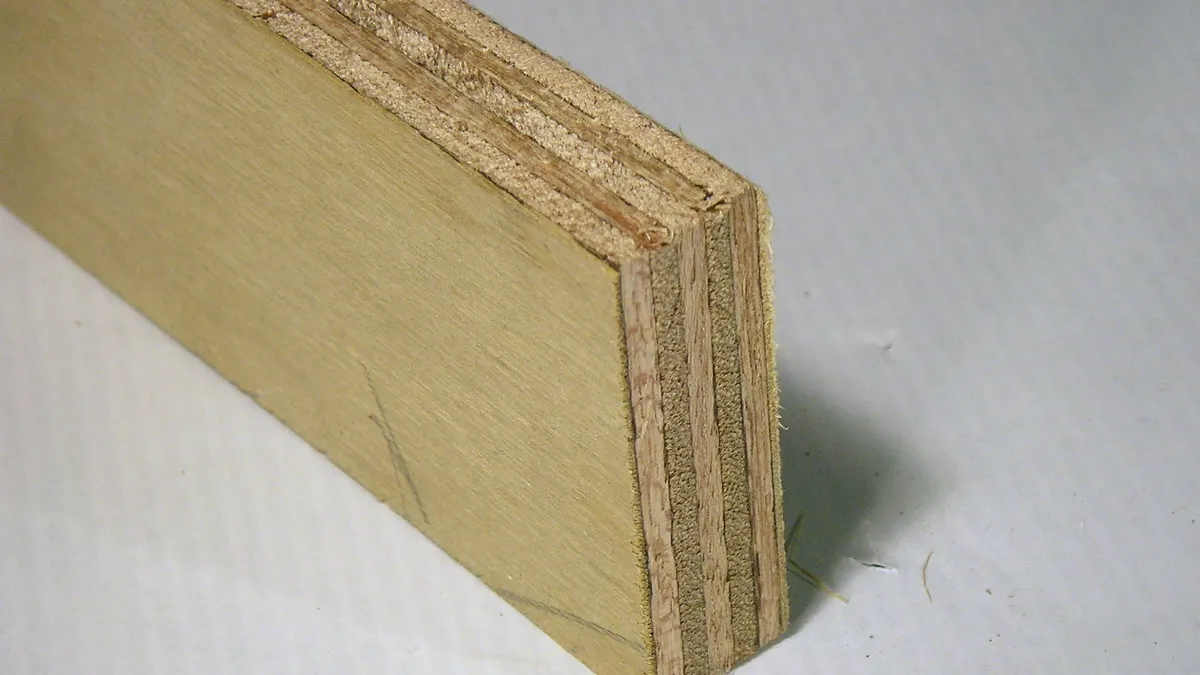
Plywood (triplek) is a versatile material used widely in homes and shops, from display shelves to bed bases. It is made from several thin wood sheets, or veneers, glued together with the grain running crosswise, which makes it more stable and less likely to split than a solid board of the same width. Anakjuragan sells Triplek 9 mm in 122x244 cm sheets. This article covers its uses, how to cut it neatly, and how to store it so it does not warp.
Uses of 9 mm plywood
A 9 mm thickness is mid-range: stiff enough to carry light to moderate loads, yet not too heavy to lift and cut yourself. Some common uses:
- Shelves for light items, such as shop display shelves or shoe racks.
- Simple partition walls on a timber or hollow steel frame.
- Bed bases on bed frames and back panels for cabinets.
- Simple workbenches, signboards, or storage boxes.
- Temporary covers during renovation, such as boarding up window openings or protecting floors.
For long spans carrying heavy loads, 9 mm plywood needs a supporting frame with closer spacing so it does not sag. For outdoor use, plywood needs protection with paint or a coating, because its edges and faces absorb water.
Measuring and marking
A 122x244 cm sheet is equivalent to 4 by 8 feet. Before cutting, sketch how you will divide the sheet so there is as little waste as possible. Measure with a tape measure, mark with a pencil, then draw the cutting line with a square or a long straightedge. Remember that the saw blade removes a few millimeters, so position the saw on the outside of the line, on the side that will become waste.
Related products in storeCheck the latest price and stock from this article. See productsHow to cut plywood without splintering
- Lay the plywood on two or more sturdy supports, such as timber battens on sawhorses, so both sides of the cutting line are supported.
- Stick masking tape along the cutting line, then redraw the line on the tape. The tape helps hold the surface fibers so they do not tear.
- For a hand saw, place the better face of the plywood facing up, because splinters tend to appear on the side where the saw teeth exit.
- Start sawing with a few slow pull strokes to make a groove, then continue with long, steady strokes at a low saw angle.
- Near the end of the cut, hold or support the piece that will come off so it does not snap and tear the edge.
- Peel the tape off slowly, pulling outward, then smooth the cut edge with sandpaper.
If you use a power saw, follow the tool's safety instructions, and note that which side splinters can differ depending on the blade's direction of rotation.
Storing plywood so it does not warp
Plywood warps mainly because its two faces absorb or release moisture unevenly. The top sheet in a stack usually warps first because only one side is exposed to the air. Some habits that help:
- Store sheets flat on several parallel timber battens or a pallet, not directly on the floor.
- Cover the top of the stack with a cover sheet, such as an old piece of plywood or a board, so both faces of the top sheet experience the same moisture.
- Store under a roof, away from blowing rain, wet floors, and direct sunlight.
- Avoid leaning plywood at an angle against a wall for long periods.
- If the plywood will be painted or varnished, coat both faces and the edges, not just the visible side.
Plywood that has been warped for a long time does not always flatten again just by being weighed down. That is why prevention from the start is far more effective.
With careful measuring, the right cutting technique, and flat, dry storage, one sheet of 9 mm plywood can be put to full use for all kinds of home and shop needs. Check prices for plywood, saws, tape measures, and nails at Anakjuragan.
FAQ
What is 9 mm plywood good for?
9 mm plywood suits shelves for light items, simple partitions, bed bases, cabinet back panels, simple workbenches, and signboards. For heavy loads or long spans, add a supporting frame.
How do I stop plywood edges from splintering when sawing?
Stick masking tape over the cutting line, place the good face up when using a hand saw, support both sides, and saw with steady strokes. Smooth the edges with sandpaper afterwards.
Why does stored plywood warp?
Usually because the two faces of the sheet experience different moisture, for example the top sheet of a stack or plywood leaned at an angle. Store it flat on battens, cover the top, and keep it away from water.