Clean water feels plentiful until the PDAM (local water utility) bill rises, the water pump runs longer, or the well starts to drop in the dry season. Saving water does not mean being less clean; it means avoiding water that is wasted for nothing. A lot of waste happens unnoticed: dripping taps, rinsing under running water, or tubs that overflow. With a few small habits and simple repairs, families can use water more wisely every day.
Fix leaking taps and pipes
Small leaks are often ignored because they only drip. The United States Environmental Protection Agency (EPA) notes that a tap dripping once per second can waste more than 3,000 gallons, or about 11,000 litres, of water in a year. That is the equivalent of dozens of drums of water lost without being used.
- Check all the taps in the bathroom, kitchen, and yard. Also listen for water running in a sit-down toilet when it is not in use.
- Tighten tap or pipe connections that seep. Wrap seal tape around the threads so the joint is watertight.
- Replace taps whose rubber washer or seat is worn. A half-inch wall tap is the common size in homes.
- If the leak is inside a wall or under the floor, get help from an experienced plumber.
If your home uses a rooftop water tank and pump, check the automatic float valve in the tank. A stuck float can make water keep overflowing from the overflow pipe and make the pump run longer, wasting both water and electricity. Make sure the tank lid is tight and clean the tank periodically as needed.
A simple way to check for hidden leaks
- Make sure all taps are closed and nobody is using water.
- Write down the reading on the PDAM water meter.
- Wait about two hours without using any water at all.
- Check the meter again. If the number has gone up, there is probably a leak to find.
- For a sit-down toilet, add a few drops of food colouring to the cistern. If colour appears in the bowl within about 10 minutes without flushing, the cistern valve is leaking. Flush afterwards so it does not leave a stain.
Save water with a bucket and water dipper
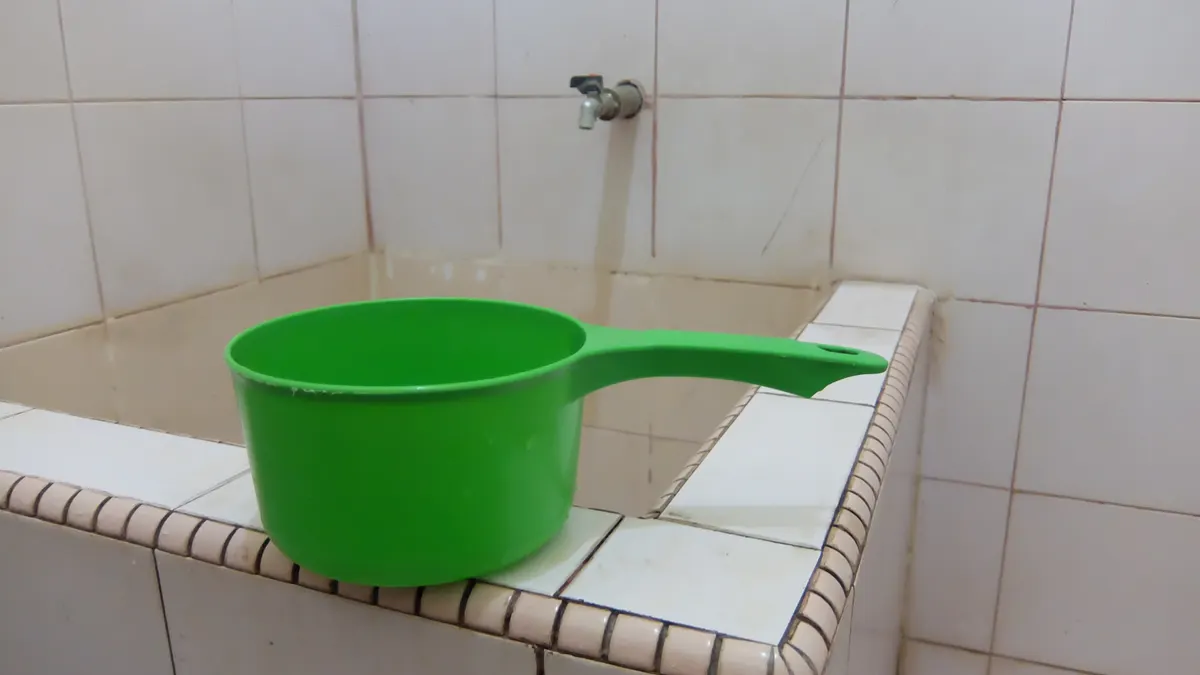
Bathing and washing with a bucket and a gayung (water dipper), a long-standing habit in Indonesia, is actually a water-saving method when done mindfully. You can clearly see how much water you use, unlike water that flows continuously from a tap or shower.
- Bathing: turn off the tap when the tub is full enough; do not let it overflow. Use the dipper sparingly to wet and rinse yourself.
- Brushing teeth and shaving: collect water in a glass or dipper instead of leaving the tap running.
- Washing dishes: scrape off leftovers, wash in a soapy basin, then rinse everything at once.
- Washing clothes by hand: use a large bucket to soak and rinse in stages rather than rinsing under the tap.
- Washing a motorbike or car: use a bucket and cloth, not a constantly running hose.
- Watering plants: do it in the morning or late afternoon so the water does not evaporate quickly, and use a dipper or watering can.
Reuse water that is still usable
Some used water can still serve purposes that do not need clean water. Water from washing rice or vegetables can be used to water plants, and collected rainwater can be used to water the yard or clean the porch.
Get the whole family involved
- Encourage children to turn off the tap after washing their hands and brushing their teeth.
- Put a small reminder near the sink or in the bathroom.
- If you use a washing machine, wash when you have a full load rather than small loads every day.
- Thaw frozen food in the refrigerator overnight, not under a running tap.
- Keep one bucket for collecting the final rinse water from laundry that is still fairly clean, and use it to rinse the porch floor or flush the toilet.
- Check your bill or meter reading every month to see the results.
Saving water starts with small things done every day. If you need to replace a tap, seal tape, a lidded bucket, or a water dipper, you can get them at Anakjuragan. You can also pay your PDAM bill online through the digital products menu.
FAQ
How can I tell if there is a water leak at home?
Close all taps, note the water meter reading, wait about two hours without using water, then check again. If the number has gone up, there is probably a leak.
Does a slightly dripping tap need fixing?
Yes. According to the EPA, a tap dripping once per second can waste more than 3,000 gallons, or about 11,000 litres, of water a year.
Which used water is safe to reuse?
Water from washing rice or vegetables can be used to water plants. Avoid using water containing detergent or bleach on vegetables that will be eaten.