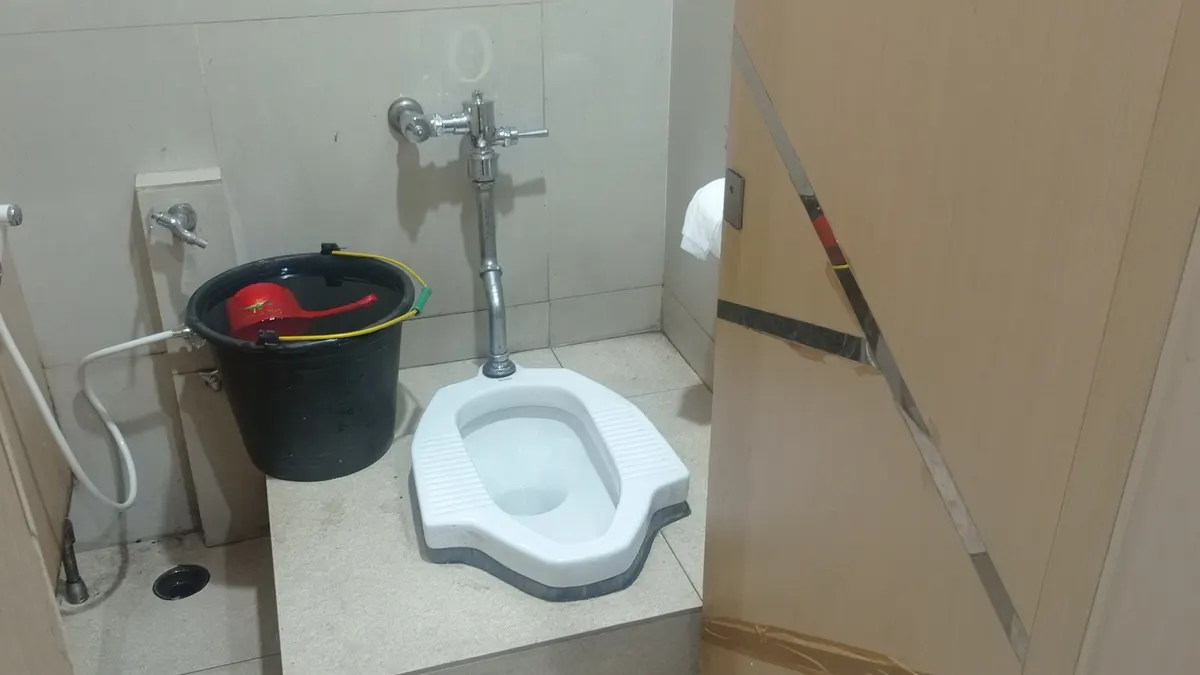
The bathroom is the room that gets dirty fastest. It is damp all day, constantly exposed to soap and water, with slippery floors, mossy water tubs, and scaled-up toilets. Cleaning it is much easier when you do it regularly and in the right order. But one thing matters far more than shiny tiles: safety when using cleaning products. Mixing the wrong cleaners can produce toxic gas in a small space like a bathroom.
Main warning: do not mix cleaners
Laundry bleach and chlorine-based cleaners (sodium hypochlorite), such as Bayclin, must NOT be mixed with other cleaners. The Washington State Department of Health in the United States warns that bleach mixed with ammonia produces chloramine gas, while bleach mixed with acids, such as vinegar, toilet bowl cleaners, or drain cleaners, releases chlorine gas. Exposure to these gases can cause coughing, shortness of breath, chest pain, and irritation of the eyes, nose, and throat. At high exposure the effects can be very serious, even fatal.
- Do not mix bleach with toilet bowl cleaner, because many toilet cleaners contain acid. Check the ingredients on the label, for example on Harpic or similar products.
- Do not mix bleach with vinegar or with glass cleaners that contain ammonia.
- Do not use two different products one after another on the same surface without rinsing it thoroughly with water first.
- Do not transfer cleaning products into other bottles, especially drink bottles.
Preparation before you start
- Open the door, window, or turn on the exhaust fan so the room is well ventilated.
- Wear household rubber gloves to protect your hands.
- Prepare a toilet brush, floor brush, sponge, cloth, bucket, and one type of cleaner for each task.
- Read the directions and dilution rates on the label of every product.
- Keep children and pets away while you clean.
Work order: top to bottom, clean to dirty
- Tidy up first: remove soap bottles, shampoo, the water dipper, and the mat from the floor.
- Clean the higher areas first: shelves, mirror, and wall tiles. Dirt that falls will be rinsed away when the floor is cleaned last.
- Drain and scrub the water tub or storage bucket. This also stops mosquito larvae from breeding.
- Clean the sink and taps, then rinse.
- Clean the toilet: pour toilet cleaner inside the bowl as directed, leave it for the time stated on the label, scrub, then flush.
- Finally, scrub the floor and the corners of the tile grout, then rinse and direct the water to the drain.
- Dry the floor as needed and leave the ventilation open so the room dries quickly.
Dealing with limescale and stubborn stains
White or yellowish scale on taps, tubs, and toilets usually comes from mineral deposits in water and soap residue. Bathroom or toilet cleaners work by dissolving this scale, so the key is to give them contact time as the label directs before scrubbing. For thick scale, repeat a few times rather than pouring in too much product at once.
Chlorine bleach is useful for removing dark mould stains in tile grout, as long as it is diluted according to the pack and used on its own, not alternated directly with acidic cleaners. After using one product, rinse the surface thoroughly with water, wait a while, and only then use another product if really needed.
A simple schedule so it does not pile up
- Daily: rinse the floor, open the ventilation, hang the mat to dry.
- Weekly: scrub the toilet, sink, and floor, and drain the water tub.
- Occasionally: scrub the tile grout, clear hair from the drain, and wipe the walls.
If there are elderly people or small children at home, pay attention to slippery floors too. After cleaning, make sure no soap or cleaner residue is left, rinse thoroughly, and place a mat at the bathroom door. Wash the toilet brush and cleaning cloths after use, dry them, and never use bathroom cloths in the kitchen so germs do not travel between rooms.
Keep all cleaners on a high shelf or in a closed cupboard, out of children's reach, and in their original containers. Supplies such as bathroom cleaner, bleach, pine disinfectant, and rubber gloves are available at Anakjuragan.
FAQ
Can I mix bleach with toilet cleaner to make it stronger?
No. Many toilet cleaners contain acid, and chlorine bleach mixed with acid releases chlorine gas, which is dangerous to inhale. Use one product only and rinse thoroughly before using another.
What should I do if I accidentally breathe in fumes from mixed cleaners?
Go to fresh air immediately and stay out of the room. If shortness of breath, chest pain, or persistent coughing occurs, seek medical help right away and bring the product packaging.
How often should the bathroom water tub be drained?
Drain and scrub it at least once a week. Besides keeping it clean, this breaks the mosquito larvae cycle in line with the 3M Plus campaign of the Indonesian Ministry of Health.