Cables and MCBs are parts of the electrical installation you rarely see, yet both play a major role in home safety. A cable that is too small for its load can overheat, melt its insulation, and cause a short circuit. An unsuitable MCB may fail to cut the power when a fault occurs. This article helps you understand the types of cables and MCBs commonly used in homes, so you can discuss them with an electrician and shop for materials with more confidence.
Getting to know NYA, NYM, and NYMHY cables
The code on a cable indicates its materials and construction. The letter N indicates a standard cable with a copper conductor, Y indicates PVC insulation, and M indicates a sheathed cable. Here are the three types most often found at hardware stores:
- NYA: a single-core cable with one layer of PVC insulation. Because the layer is thin, NYA must be installed inside a protective pipe (conduit) or closed channel and must never be left exposed. It is usually used for lighting, switch, and socket circuits inside conduit.
- NYM: a cable with two, three, or more cores, with insulation on each core plus an outer PVC sheath. It is more resistant to physical damage than NYA, so it is commonly used for home and building installations in dry areas. When run inside walls, it is still best to use protective conduit.
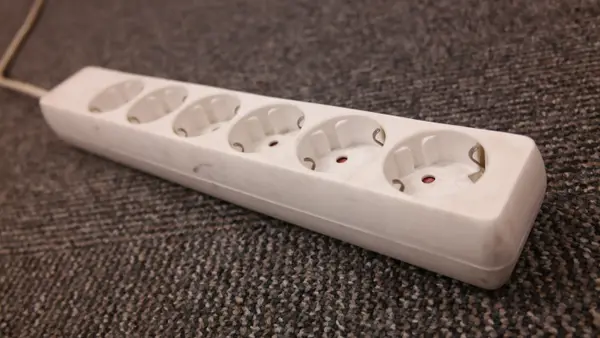
- NYMHY: a flexible stranded multi-core cable. It is suitable for connecting electrical appliances and for cable reels or extension leads, not for fixed installation inside walls.
Also pay attention to the number of cores. A two-core NYM cable carries phase and neutral. For circuits that need grounding (earthing), such as grounded sockets, electricians usually use a three-core cable or run a separate earth wire. Common color codes are black, brown, or gray for phase, blue for neutral, and green-yellow for earth.
Cable sizes 1.5 mm2 and 2.5 mm2
Figures like 1.5 mm2 or 2.5 mm2 refer to the cross-sectional area of the copper conductor. The larger the cross-section, the more current it can safely carry. In homes, the general guideline is:
- 1.5 mm2 for lighting and switch circuits, since their load is relatively small.
- 2.5 mm2 for socket circuits, because sockets power higher-wattage appliances such as irons, rice cookers, or water dispensers.
- For high-power appliances such as water heaters or air conditioners, the cable size and protection are determined by the electrician based on the appliance's load.
The figures above are only a general guide. The final size must still be matched to the load, circuit length, and installation method, in accordance with PUIL.
Related products in storeCheck the latest price and stock from this article. See productsUnderstanding 6A and 10A MCBs and your PLN power
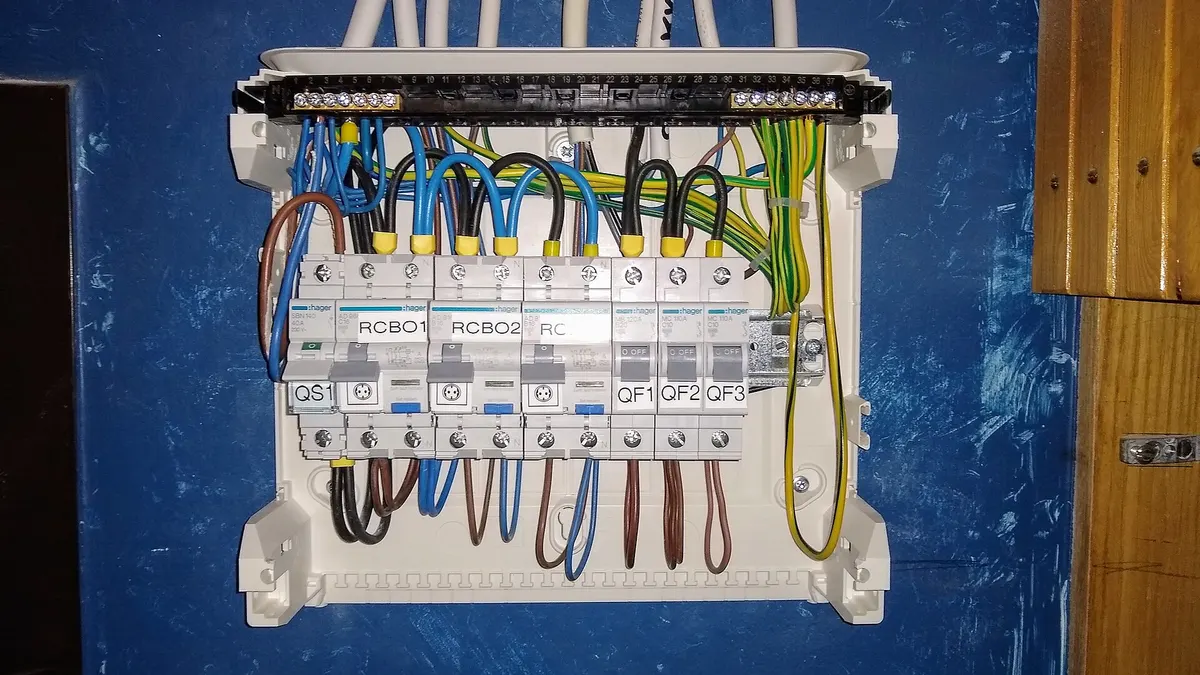
An MCB, or Miniature Circuit Breaker, automatically cuts the power when there is an overload or short circuit. Homes usually have two kinds of MCB. First, the limiting MCB next to the kWh meter, installed by PLN (the state electricity company) according to your subscribed power. This MCB belongs to PLN and must not be replaced by yourself. Second, the group MCBs inside your home's MCB box, which divide the installation into several circuits, such as a lighting circuit, a socket circuit, and a kitchen circuit.
Roughly speaking, current can be estimated by dividing power by a voltage of about 220 volts. By that calculation, a home with 1,300 VA of power is equivalent to about 6 amperes, while 2,200 VA is equivalent to about 10 amperes. That is why 6A and 10A MCBs are often found in homes with those power levels.
For group MCBs, the key principle is that the MCB rating must not exceed the current-carrying capacity of the cable on the circuit it protects. If the MCB is too large, the cable can overheat before the MCB trips. If an MCB trips often, do not simply replace it with a higher ampere rating. Have an electrician find the cause, or apply to PLN for a power upgrade if your electricity needs have genuinely increased.
Choose SNI-certified products and check the packaging
- Make sure cables, MCBs, sockets, and plugs carry the SNI (Indonesian National Standard) mark and list a clear brand and specifications.
- On cables, check the printing on the sheath: cable type, number of cores, cross-sectional size, and working voltage.
- Choose cables with copper cores whose size matches the label and insulation that does not tear easily.
- Use suitable supporting accessories, such as conduit pipes, cable clips, an MCB box, and electrical tape to tidy up connections.
Signs your installation should be checked by an electrician
- Sockets or plugs feel hot, change color, or smell burnt.
- Lights often flicker for no clear reason.
- The MCB trips often even though the load has not increased.
- Cables look cracked, peeled, or chewed by rats.
- The installation is decades old and has never been inspected.
Installation materials such as NYA and NYM cables, stranded cables, MCBs, MCB boxes, switches, sockets, and conduit pipes are available at Anakjuragan. Discuss your material needs with your electrician first, then check the latest prices on the product pages.
FAQ
Can NYA cable be installed without conduit?
It is not recommended. NYA has only one layer of insulation, so it must be installed inside a protective pipe or closed channel.
What cable size should be used for sockets?
Generally, socket circuits use 2.5 mm2 cable, while lighting circuits use 1.5 mm2. The final size is still determined by the electrician based on the load and PUIL.
My MCB trips often. Can I replace it with a higher ampere rating?
No. An MCB rated higher than the cable's capacity can let the cable overheat and create a fire risk. Have an electrician find the cause or apply to PLN for a power upgrade.