Dishwashing at home or in a small eatery never really ends. After every round of cooking and eating, a new pile appears. That is why an efficient method pays off: soap lasts longer, water is saved, and your dishes stay hygienic. The keys are the order of work, how you use soap, and caring for tools such as sponges and dish racks.
Prepare before you start washing
- Scrape food leftovers from plates into the bin, not into the sink, so the drain does not clog.
- Scrape off leftovers with a spoon or spatula; there is no need to rinse them under running water.
- Soak crusty pots or woks in warm water for a while to soften the residue.
- Group your items: glasses, cutlery, plates, bowls, then pots and pans.
Washing order: start with the cleanest
Start with the least greasy items, glasses and cups, then cutlery, plates and bowls, and finally the greasiest pots and pans. This way the sponge and soapy water do not get greasy quickly, so the soap lasts longer.
Related products in storeCheck the latest price and stock from this article. See productsHow to save soap and water
- Dissolve dishwashing liquid in a small container of water and dip the sponge into this solution. This is far more economical than squeezing soap onto the sponge each time.
- Follow the dose on the pack. Concentrated dish soaps such as Sunlight or Mama Lemon usually need only a little per basin of water.
- Scrub everything first, then rinse it all at once. Do not leave the tap running while scrubbing.
- Rinse in a basin of clean water, then do a final rinse under just enough running water. The United States Environmental Protection Agency (EPA) also suggests plugging the sink or using a basin when washing by hand, and scraping plates instead of rinsing them.
Caring for sponges and when to replace them
A dish sponge is always damp and in contact with food residue, making it a comfortable home for germs. A sponge used for too long can transfer germs onto freshly washed dishes. A few helpful habits:
- Rinse the sponge thoroughly and squeeze it as dry as possible after every use.
- Keep the sponge in an open, airy spot, not sitting in water at the bottom of the sink or in a wet soap dish.
- Keep separate sponges for dishes and for wiping tables and the stove.
- Replace sponges regularly, for example every one to two weeks, and sooner if they smell, feel slimy, change colour, or tear.
- Use the rough side of the sponge for crusty residue and the soft side for non-stick cookware so the coating is not scratched.
A sponge that is no longer fit for dishes can still be used briefly to clean the outside of the bin or the bathroom floor, then thrown away.
Dish rack: drain until completely dry
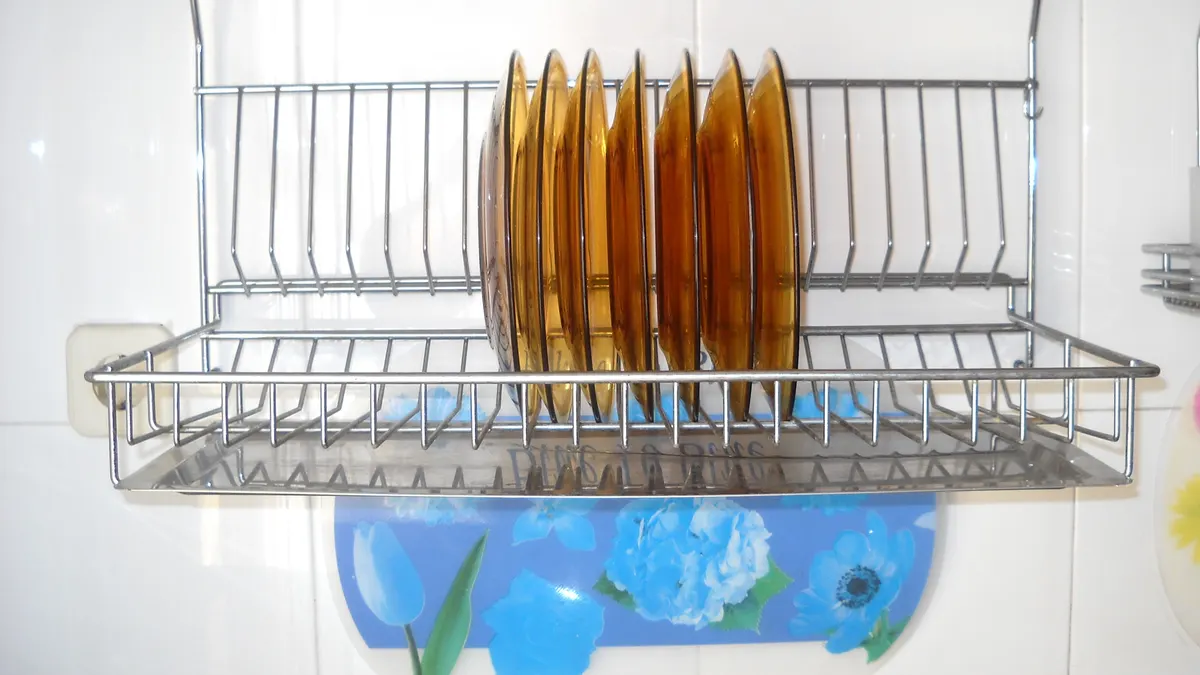
Wiping wet plates with a tea towel that has been used again and again can actually spread germs. It is better to let dishes drain on a dish rack until they air-dry. A two-tier plastic dish rack helps separate plates and glasses so air flows better.
- Stand plates at an angle and place glasses upside down so water runs off quickly.
- Do not pack items too tightly; leave gaps so no water is trapped.
- Empty and wash the drip tray under the rack regularly so it does not grow moss.
- Put dry items away in a cupboard so they are protected from dust and splashes.
For eateries with a lot of dishes, a three-stage system helps: the first basin holds soapy water for scrubbing, the second holds the first rinse water, followed by a final rinse under just enough running water. Change the basin water when it becomes murky or greasy. Chopping boards and knives used for raw meat or fish should be washed with soap right after use, separately from eating utensils.
With diluted soap, the right washing order, regularly replaced sponges, and a clean dish rack, washing up becomes faster and more economical. You can order dish soap, sponges, and dish racks from Anakjuragan along with your everyday shopping.
FAQ
How long can a dish sponge be used?
It is best to replace it regularly, for example every one to two weeks, and right away if it smells, feels slimy, changes colour, or tears.
Is it better to towel-dry or air-dry dishes?
Air-drying on a dish rack is generally more hygienic than wiping with a tea towel that has been used repeatedly. If you need to dry by hand, use a clean, dry cloth.
How can I make dish soap last longer?
Dissolve the soap in a small container of water and dip the sponge into it, and wash from the cleanest items to the greasiest.