Mopping looks like a simple chore, but the results are often disappointing: the floor still feels sticky, streaks appear once it dries, or the house ends up smelling musty. The causes are usually the work order, the amount of cleaner, and a mop that is too wet. Spin mops with a wringer bucket are now widely used because they make wringing easy without touching the dirty mop head. Here is how to use one so your floor is truly clean and dries quickly.
Step one: sweep first, then mop
Do not mop a floor that is still dusty or sandy. Dust and hair will clump on the mop and just move around. Sweep the floor first with a broom, gather the dirt with a dustpan, and pay attention to the space under tables and the corners of the room. Move mats and small items off the floor so it is easy to reach.
Preparing the water and floor cleaner
- Fill the bucket with enough clean water; it does not need to be full.
- Add floor cleaner according to the dose on the pack, for example So Klin Lantai or a pine disinfectant such as Wipol. Too much makes the floor sticky and leaves streaks.
- Stir gently so it mixes evenly.
- Use one type of cleaner only. Do not mix floor cleaner with bleach or other cleaners, as this can cause dangerous chemical reactions.
Mopping technique with a spin mop
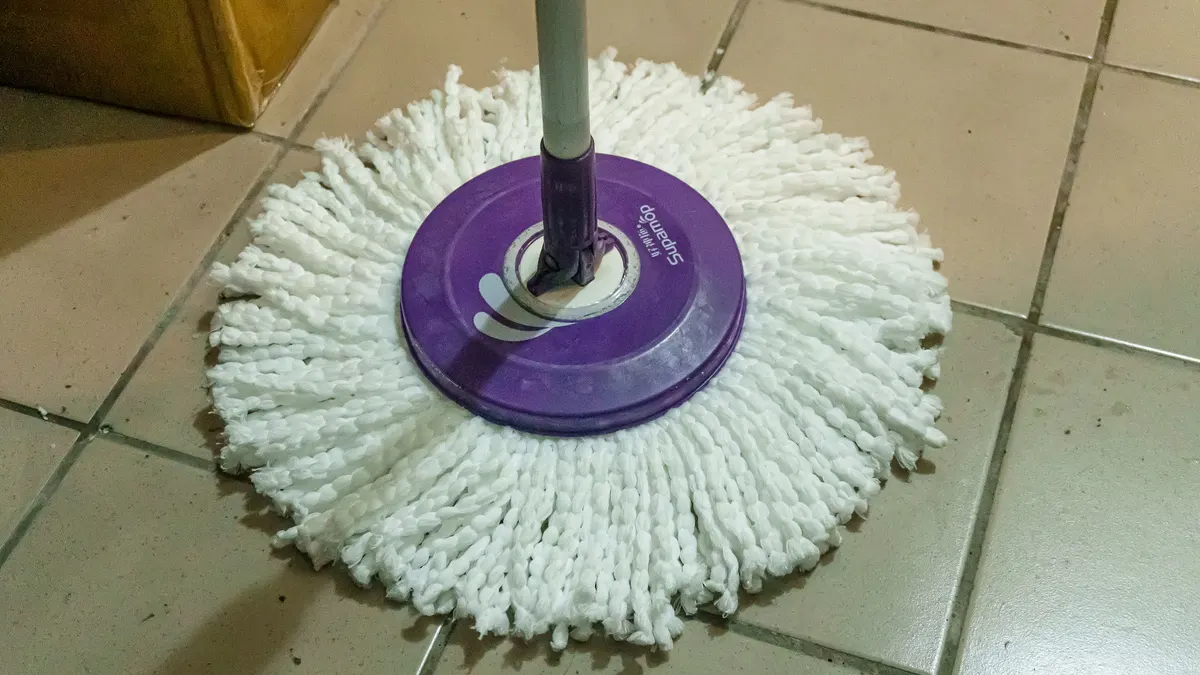
- Dip the mop head into the part of the bucket with the cleaning solution.
- Move it to the wringer basket, then press the pedal or push the handle, depending on your model, until the mop is only damp and not dripping.
- Start from the corner of the room farthest from the door, then work backwards towards the door so you do not step on the freshly mopped floor.
- Move the mop in a figure-eight or zigzag pattern, overlapping slightly so no area is missed.
- Rinse and wring the mop again every few square metres, or when it starts to look dirty.
- Change the water when it turns murky. Mopping with dirty water only spreads the dirt.
The best time to mop is when people are not walking around the house, for example in the morning after the children leave for school, so the floor can dry without footprints. If the floor is very dirty, for instance after renovation or flooding, sweep and mop in two stages: first with clean water to lift mud and dust, then with floor cleaner solution at the right dose.
A mop that is too wet is the main reason floors take long to dry, become slippery, and show streaks. On ceramic tiles and vinyl, a damp mop is enough. For wooden or parquet floors, follow the advice of the installer or floor manufacturer, because excess water can damage wood.
Areas that need special attention
- Kitchen: the floor near the stove often gets oil splatters. Wipe oily spots first with a damp soapy cloth before mopping.
- Entrance: place a microfibre doormat so dirt from outside is not carried in.
- Children's play area: after using cleaner, mop again with clean water if the pack recommends it, and make sure the floor is dry before children play.
- Bathroom floor: use a separate mop so germs from the bathroom are not carried into other rooms.
Caring for your mop so it does not smell
A smelly mop is usually one that was stored wet. When you finish, pour away the dirty water, rinse the bucket and mop head with clean water, wring it as dry as possible, then dry the mop head in a breezy spot, in sunlight if possible. Do not store the mop with its head sitting at the bottom of a closed bucket.
- Wash the mop head regularly with soap or detergent.
- Replace the mop head when the fibres are shedding, dull, or still smell after washing.
- Check the spin mechanism and wringer basket, and remove any trapped hair.
By sweeping, mopping with a damp mop, changing the water, and drying the mop, your floors stay cleaner and less slippery. Spin mops with buckets, floor cleaner, brooms, dustpans, and doormats are available at Anakjuragan, so check the latest prices.
FAQ
Why does the floor feel sticky after mopping?
Usually because too much floor cleaner was used or the mop water was already dirty. Reduce the dose to match the pack instructions and change the water whenever it turns murky.
How often should floors be mopped?
Busy areas such as the kitchen and living room can be mopped daily or several times a week. Bedrooms can be mopped less often but should still be swept regularly.
When should a spin mop head be replaced?
Replace it when the fibres are shedding, thinning, or still smell after washing and drying. A worn mop head no longer absorbs dirt well.