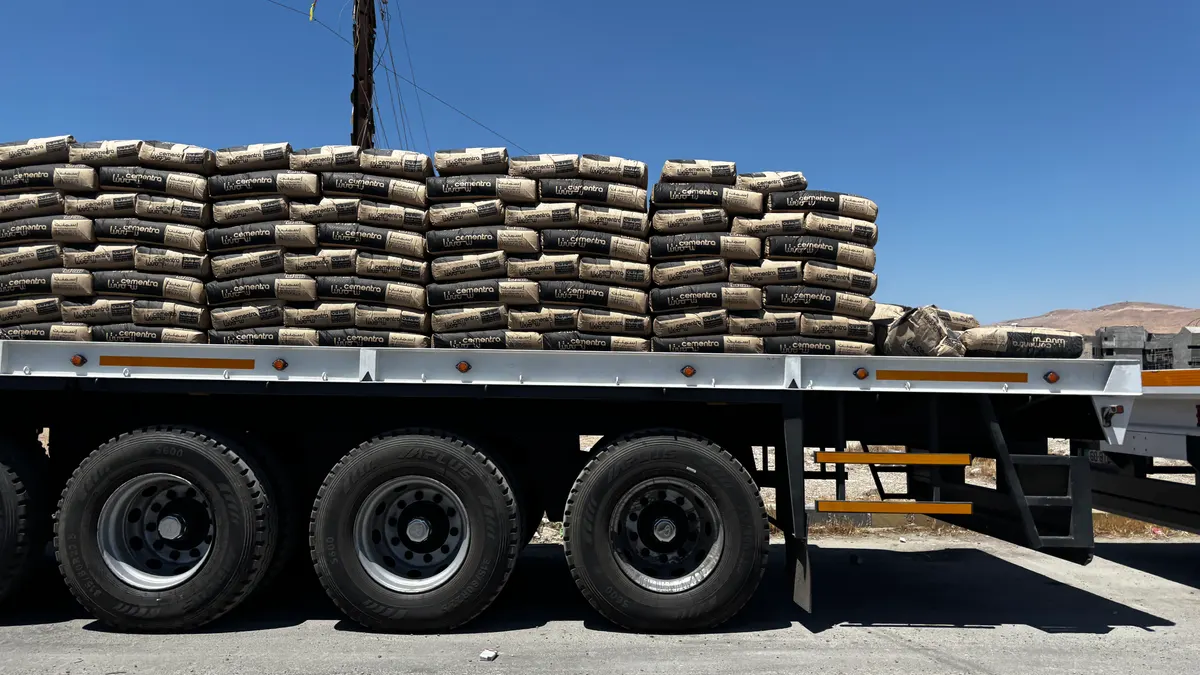
There are many cement brands on the market, and bag sizes differ too: some are 40 kg, some are 50 kg. Anakjuragan's catalog, for example, includes Semen Gresik 40 Kg, Semen Tiga Roda 50 Kg, Semen Conch 50 Kg, and Semen Padang 50Kg. This article does not crown a best brand. Instead it helps you understand cement types, compare prices fairly, and choose according to the job.
Know the cement types: PCC and OPC
Most bagged cement for household use in Indonesia is PCC, or Portland Composite Cement. PCC is made from clinker blended with additional materials such as limestone, pozzolan, or fly ash. The standard used is SNI 7064, and major producers such as Semen Padang list SNI 7064:2022 for their PCC products. PCC is intended for general construction: house concrete, brick masonry, plaster, and concrete products such as blocks and paving.
OPC, or Ordinary Portland Cement, is made almost entirely from clinker. It is divided into several types, with Type I for general use and other types for special needs, such as sulfate resistance. OPC is more often used on projects that require particular specifications, such as ready-mix concrete or work that needs high early strength.
For renovating and building houses, PCC is adequate for almost all work. What matters more for the final quality is the mix ratio, the quality of the sand and gravel, the amount of water, and curing after the pour.
40 kg or 50 kg bags?
Bag size does not change the quality of the cement. The differences are in convenience and how you calculate what you need:
- 40 kg bags are lighter to lift and move, suitable when work is done bit by bit or the site is hard to reach.
- 50 kg bags hold more per bag, so you buy fewer bags for the same volume.
- To compare prices fairly, divide the price per bag by its weight to get the price per kilogram.
- When calculating needs, work in kilograms first, then divide by the bag size. For example, 300 kg of cement equals 7.5 bags of 40 kg or 6 bags of 50 kg.
The habit of stating quantities in bags often causes miscalculations. If your builder is used to 50 kg bags and you buy the same number of 40 kg bags, you actually have 20 percent less cement.
Related products in storeCheck the latest price and stock from this article. See productsThe brands on sale
- Semen Gresik: a brand of the SIG group. Its official page lists 40 kg and 50 kg bags for general concrete construction and housing.
- Semen Tiga Roda: a brand of PT Indocement Tunggal Prakarsa. The store stocks 50 kg bags for general use.
- Semen Conch: cement produced in Indonesia by a Conch group company, sold in 50 kg bags.
- Semen Padang: a brand of the SIG group whose bagged products are PCC. We cover it in a separate review.
The descriptions above are deliberately neutral. The cement type, standard, and net weight that apply are printed on each bag, so always treat the packaging as your main reference.
What to check before buying
- The SNI mark and cement type (for example PCC) are clearly printed on the bag.
- The net weight matches what is stated; the bag is not torn, wet, or patched.
- The cement feels loose when you press the bag, with no hard lumps.
- Buy according to what you need for the next few days or weeks so it does not pile up for too long.
- For a single area of work, try to use one brand so the color and character of the mix are consistent.
Storing cement at home
Store cement bags in a dry, roofed room, on pallets or boards, away from walls, and do not stack them too high. Use the oldest stock first. Cement that has formed hard lumps that do not crumble when squeezed should not be used for structural work.
In short, for houses choose an SNI-marked PCC cement from a brand that is easy for you to get, compare the price per kilogram, and calculate your needs in kilograms. Check the latest prices for Semen Gresik, Semen Tiga Roda, Semen Conch, and Semen Padang at Anakjuragan.
FAQ
Is cement in 50 kg bags stronger than in 40 kg bags?
No. Bag size only indicates the contents. Cement quality is determined by the product type and standard, not the weight of the packaging.
For a house roof slab, do I need OPC or is PCC enough?
PCC is intended for general construction including house concrete, so it is generally enough. More important are the mix, the reinforcement, and curing. Follow the specifications from a structural engineer if there are any.
Can I mix two cement brands in one batch?
It is best avoided. Each brand may differ slightly, for example in color and setting time. Use one brand for each area of work so the result is consistent.