A leaking pipe joint can leave walls damp, push up your water bill, and force you to tear the work out again. Yet most leaks in PVC pipes come from small mistakes: an angled cut, too little or too much cement, a pipe not pushed fully home, or a joint that gets water too soon. This guide covers how to join PVC pipes with solvent cement and how to fit threaded connections such as wall taps using seal tape.
Prepare tools and materials
- PVC pipe of the right size, for example 3/4 inch for clean water lines and 2 inch for drainage.
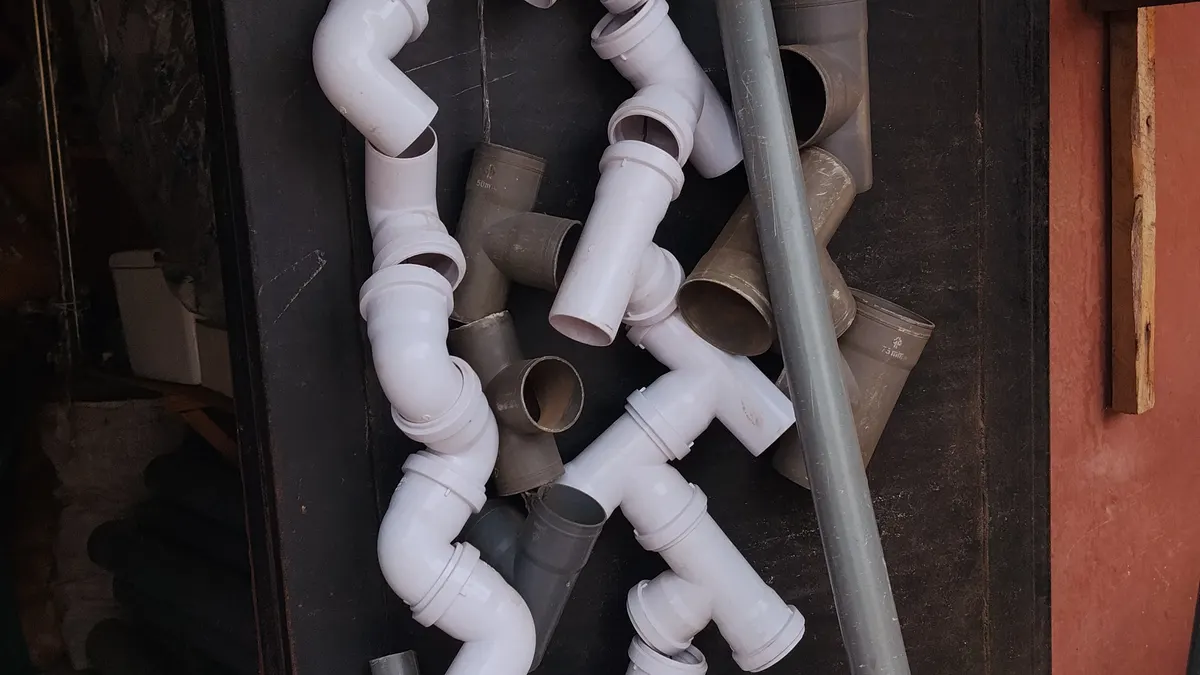
- Fittings such as elbows (knee), tees, and couplings the same size as the pipe.
- PVC pipe cement.
- Seal tape for threaded joints.
- A fine-tooth hacksaw or pipe cutter, sandpaper, pencil, tape measure, and a clean cloth.
Steps to join pipes with cement
The steps below summarize industry guidelines for joining PVC pipes with solvent cement. Always read the instructions on the cement you are using as well.
- Cut the pipe square. An angled cut stops the pipe end from seating fully inside the socket.
- Remove burrs or plastic shavings from the outer and inner edges of the cut with sandpaper or a knife. Do not create an overly large chamfer.
- Mark the pipe in pencil at a distance equal to the socket depth, so you know when the pipe is fully inserted.
- Dry-fit first without cement to make sure the size fits and the fitting faces the right way.
- Make sure the pipe surface and the inside of the socket are clean and dry. Dirt and water can make the joint fail.
- Apply a thin, even coat of cement inside the socket, then on the outside of the pipe up to the mark. Leave no dry patches, but do not overdo it so that cement pools at the bottom of the socket.
- Immediately push the pipe into the socket in one movement up to the mark. A quarter turn just before it is fully home helps spread the cement.
- Hold the joint for at least 30 seconds so the pipe does not push back out, then wipe off excess cement on the outside.
A cemented joint cannot be fixed by pulling it apart and re-gluing. If it is wrong, cut that section out and make a new joint. So make sure the elbow or tee is facing the right way before applying cement.
Related products in storeCheck the latest price and stock from this article. See productsWaiting time before running water
The same industry guidelines recommend not disturbing the joint for about five minutes and not handling it roughly for at least one hour. Do not run water for at least one hour after the last joint is made, and do not apply full pressure for at least 24 hours. In cold temperatures, curing takes longer. Leave pipe ends open so solvent vapor can escape.
Fitting wall taps and threaded joints with seal tape
Wall taps, such as the Kran Air Tembok Onda 1/2 Inci, are connected by threads, not cement. On threaded joints, seal tape fills the gaps between the threads so water does not seep out.
- Clean the threads of dust and old seal tape.
- Wrap seal tape around the male thread in the same direction you turn when tightening, so the tape does not unravel as the tap is screwed in.
- Wrap several turns with slight tension so it settles into the thread grooves, without covering the pipe opening.
- Screw the tap in by hand until snug, then tighten just enough. Overtightening can crack plastic fittings.
- Make sure the tap sits upright and not tilted, then test by turning on the water and checking for seepage.
Seal tape is only for threaded joints. Do not use it on cemented joints, because it actually prevents the cement from bonding the pipe and socket surfaces.
How to test for leaks
Once the waiting time is over, run water at normal pressure. Wipe all joints dry, then check again after a while. A dry tissue pressed against a joint helps reveal small seepage. Do this test before the pipe is buried in a wall or covered by flooring.
A straight cut, clean surfaces, an even coat of cement, a fully inserted pipe, and patience while the cement cures are the keys to a long-lasting PVC joint. You can check prices for PVC pipes, pipe cement, elbows, seal tape, and wall taps at Anakjuragan.
FAQ
How long does PVC pipe cement need before water can flow?
Industry guidelines recommend not running water for at least one hour after the last joint and not applying full pressure for at least 24 hours. Also follow the instructions on the cement you use.
Can seal tape be used on cemented joints?
No. Seal tape is only for threaded joints such as taps and threaded couplings. On cemented joints, seal tape prevents the cement from bonding.
I cemented a joint facing the wrong way. Can I take it apart?
A cemented PVC joint cannot be remade once the cement has bonded. Cut out the wrong section and rejoin it using a new fitting.