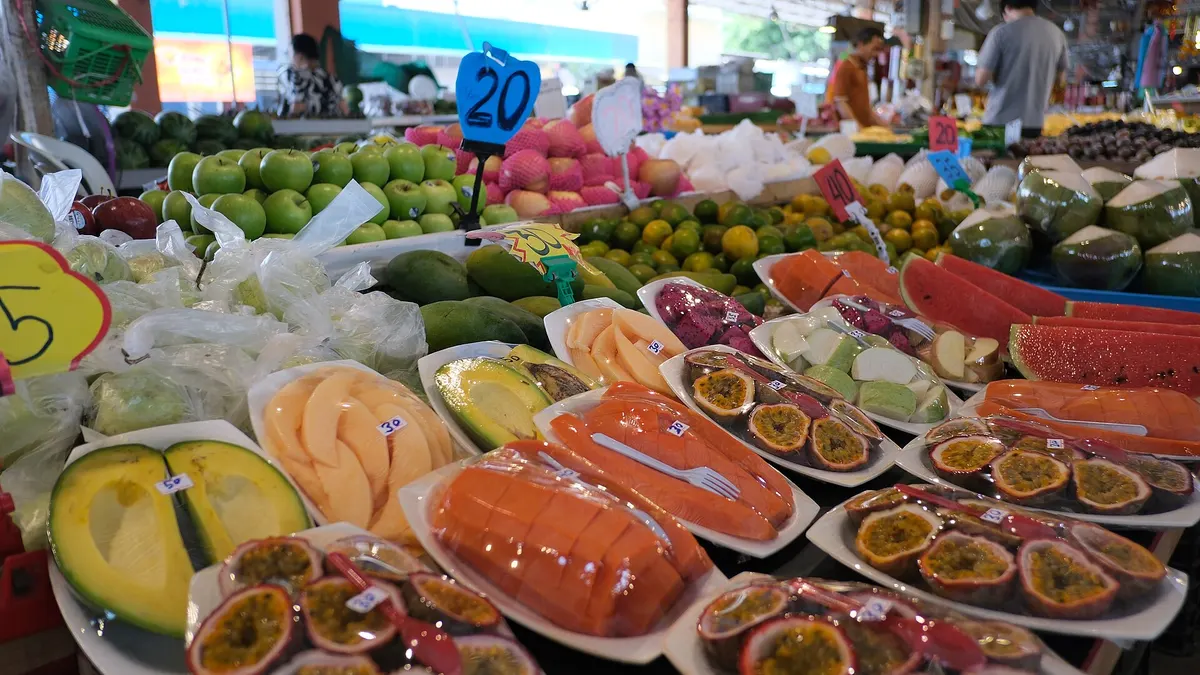
Choosing ripe, sweet fruit can sometimes feel like a matter of luck. In fact, each fruit has ripeness signs you can recognize from its color, aroma, weight, and skin texture. These signs are not an absolute guarantee, but they help you get better fruit, whether for your family or for resale as cut fruit or juice.
Mango
Skin color is not always the main indicator for mangoes, because some varieties such as harum manis stay greenish even when ripe.
- Smell the stem end. A ripe mango gives off a clear, sweet aroma.
- Press gently. A ripe mango is slightly soft, not rock hard and not too mushy.
- Avoid mangoes with wrinkled skin, large black spots, or leaking juice.
- Hard mangoes can be ripened at room temperature for a few days, for example wrapped in newspaper.
Melon
- For netted melons, choose one with a dense, raised, and even net pattern on the skin.
- Smell the stem scar. A ripe melon smells sweet.
- The end opposite the stem is slightly soft when pressed.
- Choose one that feels heavy for its size, a sign of good water content.
- Avoid melons with soft, watery, or moldy patches.
Watermelon
- Look for a creamy yellow patch on one side. This is the part that rested on the ground while growing, and a yellowish color often indicates the fruit ripened long enough on the vine.
- Tap it with your finger. A ripe watermelon usually sounds deep and hollow, not high-pitched and solid.
- Choose one that feels heavy for its size.
- The skin should be somewhat dull, not too shiny, and free of bruises or cracks.
Pineapple
- Smell the bottom of the fruit. A ripe pineapple smells sweet and fresh, not sharply sour like fermentation.
- The skin color starts turning yellow from the bottom upward.
- The fruit feels heavy and gives slightly when pressed, but is not mushy.
- Avoid pineapples with watery or moldy areas or a smell like tapai (fermented cassava).
Pineapples do not get sweeter after picking, so choose one that is already ripe when you buy it.
Papaya
- Choose a papaya whose skin is mostly yellow or orange.
- When pressed, the fruit is evenly slightly soft, not mushy at one spot.
- Small black spots on the skin are usually not a problem, but avoid sunken, watery, or moldy areas.
- Papayas still streaked with green can be ripened at room temperature until yellow.
Storing fruit after buying
FAO storage guidance groups mango, papaya, and pineapple as fruits sensitive to overly cold temperatures. For this reason, fruit that is still underripe should be ripened at room temperature first. Once ripe, whole fruit can go into the fridge for a few days so it does not become overripe.
- Wash the fruit skin under running water before cutting, including melons and watermelons whose skin is not eaten, so dirt is not carried by the knife into the flesh.
- Use a clean knife and cutting board, separate from those used for raw meat.
- Store cut fruit in a closed container in the fridge and finish it within a short time.
- Do not leave cut fruit at room temperature for too long, especially when selling it.
If you buy fruit for several days, choose different levels of ripeness. Take some that are already ripe to eat that day and some that are still underripe for the following days. This way, the fruit does not all ripen at once and none goes to waste. For juice or cut fruit sellers, fruit that is overripe but not rotten can still be made into juice, fruit ice, or jam, as long as bruised or damaged parts are cut away generously and the fruit still smells fresh.
Pay attention to fruit seasons too. Fruit in its harvest season is usually easier to find ripe and sweet, with more choices. Outside the season, fruit may be picked earlier to survive transport, so it needs longer ripening at home. When shopping online, read the size and weight details on the product page, then check the fruit as soon as it arrives. Keep it in a shaded, airy place first; do not pile it in a closed plastic bag, which makes fruit sweat and rot quickly.
FAQ
Does a green mango mean it is not ripe?
Not always. Some varieties such as harum manis stay greenish when ripe. Use the aroma at the stem end and how it feels when pressed as guides.
How do I tap a watermelon correctly?
Tap it with your fingers or palm. A deep, hollow sound usually means the watermelon is ripe, while a high-pitched, solid sound means it is not yet ripe.
Can underripe fruit go straight into the fridge?
It is better not to for mangoes, papayas, and pineapples, which are sensitive to cold. Ripen them at room temperature first, then store them in the fridge once ripe.